IELTS for Filipino Nurses: The Exact Band Scores and Smart Choices That Get Your Deployment Approved
Quick answer: Filipino nurses working abroad typically need IELTS Academic scores of 7.0 in Listening, Reading, and Speaking, and 6.5 in Writing, for UK (NMC) or Australian (AHPRA) nursing registration. The USA requires 6.5 overall through CGFNS, and a minimum of 7.0 in Speaking specifically. Always book IELTS Academic, not General Training. The UK’s NMC and Australia’s AHPRA also accept OET as an alternative.
Your placement agency has sent a spreadsheet. Six destination countries, six different band score requirements, and a note to check with each regulatory body directly. This guide answers the ten questions most asked about IELTS for Filipino nurses preparing for overseas deployment, covering required band scores, the choice between IELTS and OET, and how to prepare around hospital shifts.

What IELTS Band Score Do Filipino Nurses Need to Work Abroad?
The minimum IELTS band score varies by destination and by which regulatory body sets the requirement. For IELTS for Filipino nurses targeting the UK or Australia, the target is 7.0 in Listening, Reading, and Speaking, and 6.5 in Writing, with no averaging.
IELTS is scored on a nine-band scale in 0.5-band increments across four components: Listening, Reading, Writing, and Speaking. Each component is scored independently. Some regulatory bodies require a minimum in each component, not just in the overall average. That distinction matters considerably.
| Destination | Regulatory body | Minimum overall | Minimum per component |
|---|---|---|---|
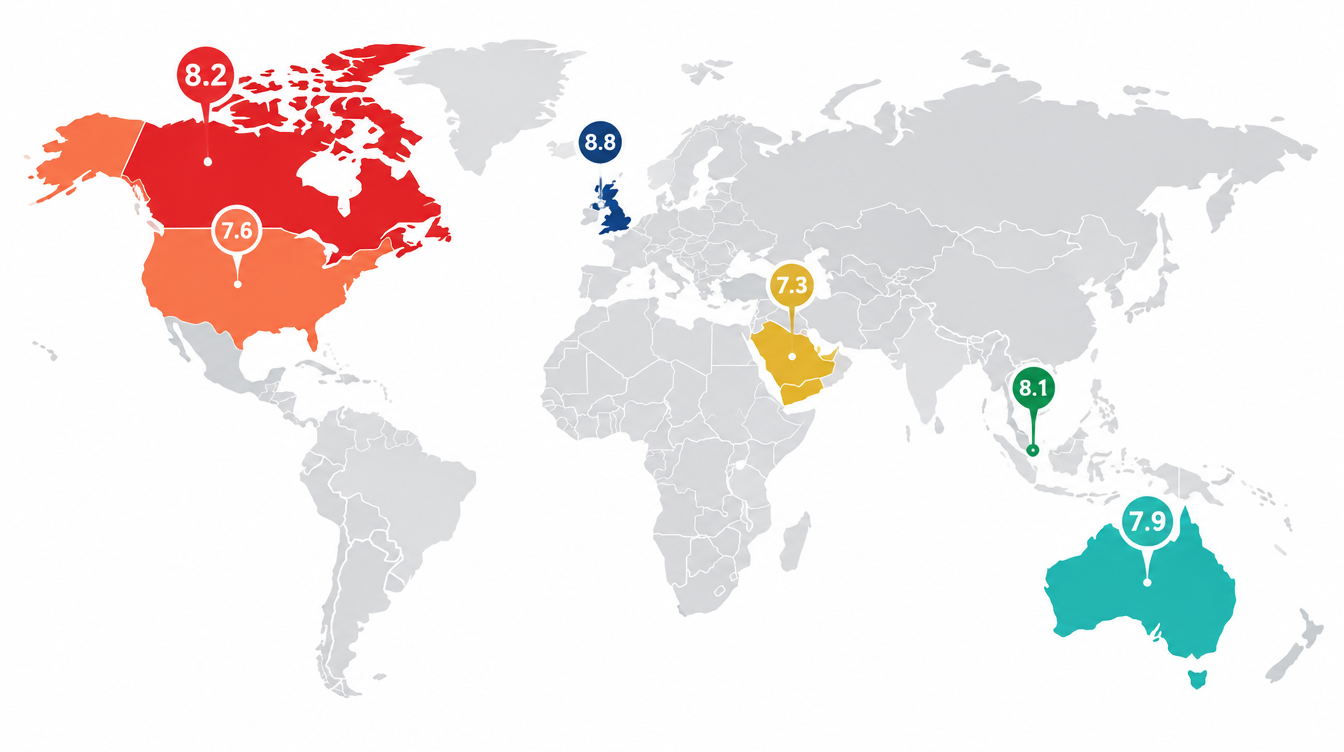
| United Kingdom | NMC | 7.0 | 7.0 in L, R, S; 6.5 in Writing (no averaging) |
| Australia | AHPRA | 7.0 | 7.0 in L, R, S; 6.5 in Writing |
| United States | CGFNS | 6.5 | 7.0 in Speaking; other components vary by state board |
| UAE / Gulf states | Varies by employer | 6.0-7.0 | Varies |
| Canada | NNAS / provincial colleges | 6.5-7.0 | Varies by province |
| Singapore | SNB | 7.0 | 7.0 in all four |
A nurse scoring 7.5 in Listening and Reading but 6.0 in Writing falls short of the NMC and AHPRA Writing floor of 6.5, even when the overall average appears adequate. What matters for the UK and Australia is the per-component floor, not the overall average.
How Do IELTS Requirements Differ by Destination Country?
The critical distinction is whether a regulatory body applies a per-component floor or only an overall minimum. The NMC and AHPRA both apply per-component floors with no averaging: 7.0 in Listening, Reading, and Speaking, and 6.5 in Writing. A candidate with 7.5 in Reading, Writing, and Listening but 6.5 in Speaking sits below the NMC and AHPRA Speaking floor of 7.0, despite a 7.25 overall average.
According to the NMC’s English language requirements for internationally educated nurses, candidates must achieve band 7.0 or above in Listening, Reading, and Speaking, and band 6.5 or above in Writing. AHPRA applies the same per-component structure under its English language skills registration standard: 7.0 in Listening, Reading, and Speaking, and 6.5 in Writing.
For the United States, CGFNS requires 6.5 overall and a minimum of 7.0 in Speaking, but individual state nursing boards may set higher conditions on the other components. Gulf-state requirements are employer-specific. Confirm the exact requirement with your recruitment agency before booking a test.
What Does POEA Require for English Language Certification Before Overseas Deployment?
The Philippine Overseas Employment Administration (now the Department of Migrant Workers, DMW) requires a Certificate of English Language Proficiency from nurses applying for overseas deployment clearance. This certificate must come from a DMW-approved provider. It is a Philippine government export-side requirement that operates separately from the destination country nursing body requirement.
Satisfying the NMC or AHPRA requirement does not automatically satisfy the DMW requirement unless the test provider is also on the DMW approved list. A nurse must meet both requirements independently. The typical sequence is: PRC licence, any required credential evaluation (such as CGFNS), English test at a DMW-approved provider, agency endorsement, then DMW clearance.
Should Filipino Nurses Take Academic IELTS or General Training IELTS?
IELTS Academic. This is the most common and most consequential registration mistake nurses make.
IELTS Academic and General Training are different examinations. General Training tests English for migration and non-professional employment. Academic IELTS is required for professional nursing registration with the NMC, AHPRA, and CGFNS. Booking General Training by mistake means sitting a test nursing regulatory bodies will not accept, losing the registration fee, and waiting for the next available Academic test date, which typically delays deployment by several weeks to months.
The Speechful blog covers the difference between IELTS Academic and General Training writing tasks for nurses who want to understand what the Academic writing component involves before registering.
OET vs IELTS: Which Is the Better Choice for Filipino Nurses?
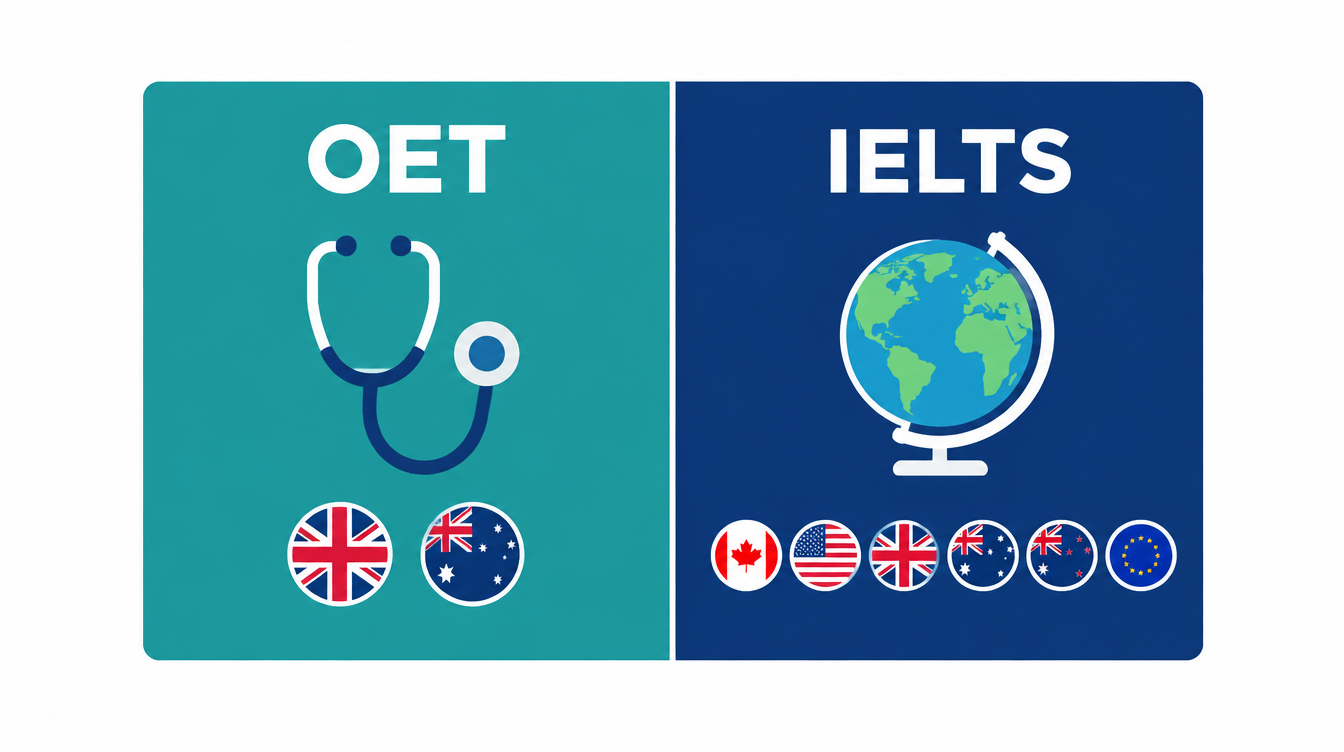
Both the NMC and AHPRA accept OET (Occupational English Test) alongside IELTS Academic for nursing registration. Neither is universally the right choice; it depends on your destination, your clinical English background, and test availability in the Philippines.
OET tests English through healthcare-specific scenarios: a patient referral letter in Writing, clinical contexts in Reading and Listening. For nurses working in English-medium clinical environments, OET may feel more natural. For NMC registration, the required OET score is Grade B in Listening, Reading, and Speaking, and Grade C+ in Writing. For AHPRA registration, OET is scored on a numeric 0-500 scale: a minimum of 350 in Listening and Writing, and 360 in Reading and Speaking. OET’s published guidance confirms these scores are accepted for nursing registration by both bodies.
IELTS Academic has more test centres in the Philippines and wider destination acceptance. Gulf-state employers and most US pathways require IELTS, not OET. The practical rule: if your target is the UK or Australia only, OET is a genuine option. If you are keeping multiple destinations open or targeting the Gulf or USA, IELTS Academic is the safer path.
Which Countries and Nursing Bodies Accept OET Instead of IELTS?
The NMC (United Kingdom) and AHPRA (Australia) accept OET for nursing registration. OET is not widely accepted in other destinations.
CGFNS does not universally accept OET across all US state nursing board pathways. Nurses pursuing US registration should confirm with their specific state board before booking OET. Gulf-state hospitals generally specify IELTS Academic by name in recruitment requirements; OET acceptance is uncommon in the region. Canada’s provincial nursing colleges vary: some accept OET, others specify IELTS only, so check the relevant provincial college directly.
Which Part of IELTS Do Filipino Nurses Most Commonly Struggle to Pass?
Speaking and Writing are the two components where most Filipino nurses fall short of Band 7.0. Listening and Reading are generally stronger for nursing candidates with clinical training backgrounds.
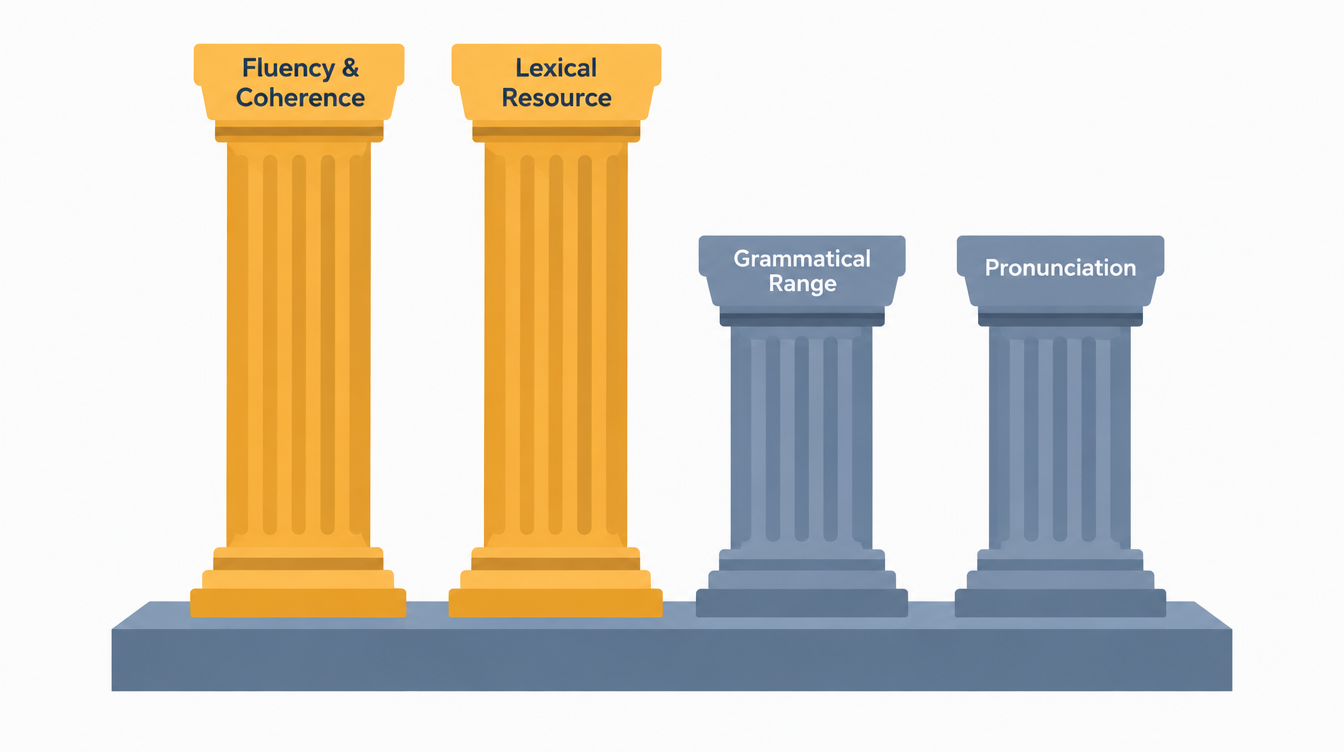
The common misconception is that accent causes lower Speaking scores. Pronunciation is only one of four IELTS Speaking criteria. The other three are Fluency and Coherence, Lexical Resource, and Grammatical Range and Accuracy. These three are where the distance between Band 6.0 and Band 7.0 typically sits. A nurse who speaks clearly but uses short sentences and a limited vocabulary range will score below Band 7.0 on Fluency and Lexical Resource regardless of accent.
For Writing, Task 1 Academic (describing charts and graphs) is consistently harder for nurses than Task 2 essay writing. Clinical training rarely involves formal data description language. Practising with a targeted IELTS Writing Task 1 vocabulary resource significantly reduces the cognitive load of Task 1 over several weeks.
How Long Does It Take a Filipino Nurse to Prepare for IELTS?
Most nurses starting from a Band 6.0-6.5 baseline across all four components need three to six months of consistent preparation to reach Band 7.0. Nurses already close to 6.5 in most components can sometimes reach the goal in eight to twelve weeks. Nurses at Band 5.5 or below typically need six months or more.
There is no shortcut to Band 7.0. Examiners assess accumulated communicative competence, not test-day technique. The British Council advises building genuine English skills through sustained practice rather than test-specific drilling. If your test date is approaching quickly, the Speechful guide on IELTS preparation in 2 weeks covers how to structure an accelerated study period.
What Should a Filipino Nurse Focus on in IELTS Preparation to Close the Band Score Difference?
For nurses at Band 6.0-6.5 in Speaking and Writing, targeted preparation in those two components produces more progress per hour than balanced preparation across all four.
For Speaking: Part 2 (the long turn) is the highest-priority area. Band 7.0 Fluency and Coherence requires speaking at length for two minutes without extended pauses. Practise by timing yourself without notes. Part 3 should focus on expressing and defending opinions with specific examples, not only describing facts. This is where Lexical Resource is most visible to examiners.
For Writing Task 1 Academic: practise producing accurate overview sentences (the most important element of a Band 7 Task 1 response) and correct comparative structures. For Writing Task 2: practise maintaining a clear, consistent position across the full response. Band 7.0 Task Response requires a discernible viewpoint developed throughout, not a general discussion of both sides.
How Can a Working Nurse Build IELTS Speaking and Writing Skills Between Hospital Shifts?
Consistent short practice sessions are more effective than infrequent long ones, and they fit shift work more realistically.
For Speaking: a fifteen to twenty-minute Part 2 practice block on a break builds fluency over time. Record your answer, listen back for hesitations and repetitions, and practise again with the aim of reducing pauses. For Writing Task 1: practise describing one chart in timed conditions, check your word count (minimum 150 words), confirm you have written an overview sentence, and review your comparative language. Task 1 practice in twenty-five-minute blocks produces steady improvement over weeks.
Getting scored feedback on Speaking responses without scheduling around a tutor is the hardest part of self-preparation for most nurses. Most Filipino nurses find Listening and Reading manageable; it is the Speaking and Writing components where the distance to Band 7 sits. Practise your Speaking responses against the IELTS criteria any time, any shift, with Speechful’s IELTS Speaking AI grader. For Writing, Speechful’s AI grader scores your Task 1 and Task 2 responses against the same four official IELTS Writing criteria. Try both at speechful.ai/ielts-ai.