

Why Overthinking Grammar Silently Kills Your English Fluency (And What Confident Speakers Do Instead)
After years of study, a solid grammar foundation, and a vocabulary that covers most topics, something still goes wrong the moment a real conversation begins: sentences stall, words disappear mid-thought, and the whole thing trails off.
English fluency is not something you build by knowing more grammar. If it were, this frustration would not be so common. The real issue is automaticity: the ability to produce what you know quickly enough for actual conversation. Understanding that specific mechanism is what makes the difference between a problem that keeps coming back and one that finally gets fixed.

What English Fluency Actually Means (And Why It Differs from Accuracy)
The Common European Framework of Reference (CEFR) describes a B2-level speaker as one who “can express themselves fluently and spontaneously without much obvious searching for expressions.” This definition separates two distinct skills. Accuracy is producing grammatically correct sentences. English fluency is producing speech that flows continuously without stalling, self-interruption, or searching for words.
The two require different cognitive processes: accuracy is a skill that can be developed at any pace, whereas speaking cannot pause for review. Most intermediate learners can produce correct English in writing given enough time to think. Conversation does not offer that allowance, because a listener expects a continuous response in real time, which means English fluency is, at its core, a speed and automaticity skill. Grammatical accuracy that cannot operate fast enough for conversation is knowledge, but it has not yet become fluency.
Why Good Grammar Knowledge Doesn’t Always Mean English Fluency
One of the most common frustrations among intermediate speakers is that English fluency does not match their grammar knowledge. They can explain the present perfect, spot errors in a text, and pass written exams. Yet in conversation, speech stalls.
The gap has a name in applied linguistics. Declarative knowledge is knowing that something is true: knowing the grammar rule. Procedural knowledge is applying that rule automatically during speech without stopping to recall it. As John Anderson’s ACT-R framework (Carnegie Mellon University) describes, these two types of knowledge sit in different memory systems. Declarative knowledge does not convert to procedural automatically. Only repeated procedural practice (actually using the rule aloud, in real time) causes the transfer.
This is why English fluency does not naturally follow from grammar knowledge. The transfer from knowing to doing requires sustained speaking practice. More grammar study adds more declarative knowledge, but without procedural practice, English fluency remains out of reach.
The Monitor Trap: How Self-Correction Quietly Stalls Your Speaking
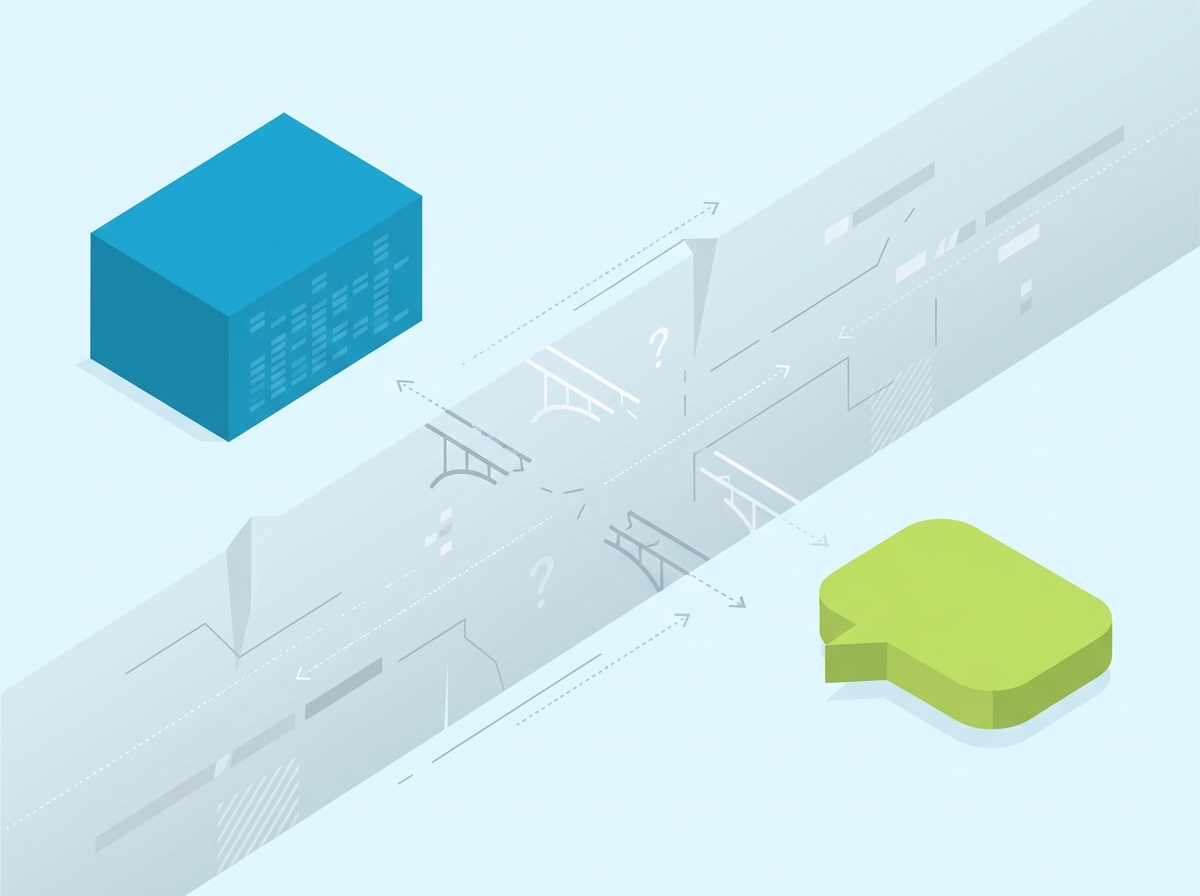
In the early 1980s, linguist Stephen Krashen (University of Southern California) introduced the Monitor Hypothesis, one of the most cited frameworks in second-language acquisition. His central argument: second-language speakers operate through two systems: an acquired system that produces natural, automatic speech, and a monitor that consciously checks and edits output for accuracy.
The monitor has a role in limited conditions: when there is time, when accuracy matters above speed, and when the relevant rule is consciously known. Outside those conditions, it actively interferes with fluent speech. Running it in real-time conversation creates a bottleneck. The speaker tries to produce and edit a sentence simultaneously, which the cognitive system cannot sustain at conversation speed. Pauses multiply, sentences go unfinished, and speaking errors accumulate in patterns that damage overall fluency scores.
Krashen’s hypothesis has drawn academic critique over the decades and is best treated as an influential framework rather than settled theory. The classroom observation it describes is consistently reported in second-language acquisition research: speakers who run the grammar monitor in real-time speech produce less fluent, not more accurate, output.
The Most Common Practice Mistake That Deepens the Problem
Most learners respond to hesitant speaking by studying more grammar. The reasoning feels logical: if grammar errors are causing hesitation, more grammar knowledge should fix it. In practice, the result is the opposite.
Each additional grammar rule gives the monitor more material to check. A learner who has reviewed every article rule will pause to check many more things mid-sentence than one who knows only the core rules. More declarative grammar knowledge, without procedural practice to match, increases monitor load. Speech becomes more halting, not less.
For intermediate English speakers with solid grammatical foundations, the productive path is not more grammar study but speaking practice that forces existing knowledge into procedural use. Studying grammar past the intermediate level without pairing it with speaking practice actively slows progress towards fluency.
Declarative vs Procedural Knowledge: The Gap Only Speaking Practice Bridges
Anderson’s ACT-R framework describes a pattern that appears across complex skill acquisition: skills begin as declarative (conscious, effortful, slow) and become procedural (automatic, effortless, fast) through repeated practice alone. This pattern holds in reading music, performing surgery, and speaking a second language.
The bridge from declarative to procedural is not review: it is practice under conditions that force real-time production. British Council research on speaking development consistently identifies extensive goal-directed speaking practice as the essential mechanism for procedural fluency. Revision of grammar theory does not do this work.
For intermediate English learners, this means the grammar they already know will not produce English fluency on its own. That declarative knowledge must be rehearsed aloud, repeatedly, in contexts that require real-time production, before it becomes the automatic procedural skill that natural conversation requires.
How Fear of Grammar Mistakes Actually Increases the Number of Mistakes
Fear of making grammar errors pushes learners to monitor their speech more closely. More monitoring slows speech, increases pauses, and produces incomplete sentences: precisely the errors the learner was trying to avoid. The fear produces the outcome it was designed to prevent.
Research on second-language anxiety, including findings cited in Cambridge English assessor development materials, links high language anxiety to reduced working memory availability during speech. When attention is directed towards error detection, less cognitive resource is available for sentence construction, word retrieval, and processing what the listener says.
Krashen’s three learner types illustrate the consequence. The monitor overuser (who checks every word before speaking) produces the most hesitant and error-prone output. The monitor underuser speaks freely but leaves errors uncorrected. The optimal monitor user self-corrects only when genuinely necessary, without disrupting flow, and produces the most accurate and fluent output overall. The optimal path to English fluency is reduced monitoring, not increased vigilance.

How Much Practice Does It Take to Build English Fluency?
The honest answer is more than most learners expect, though considerably less than most fear, provided the practice is goal-directed.
Applied linguistics research on speaking automaticity consistently identifies regular, goal-directed speaking practice (with real-time language production) as the essential mechanism. Significant reductions in monitor overuse typically require 30 to 60 hours of practice spread across six to eight weeks. This investment must be distributed across many sessions rather than concentrated in occasional long study days.
Frequency matters more than duration. Three 20-minute speaking sessions per week develop English fluency faster than one 60-minute session at equivalent total hours, because distributed practice builds procedural memory more effectively. Daily conversation practice, even in brief sessions, maintains the procedural pathways being built.
There is no shortcut: English fluency develops through consistent, deliberate practice spread across weeks, and no article or grammar workbook substitutes for time spent actually speaking.
Why Low-Stakes Conversations Build Fluency Faster Than High-Stakes Situations
The common assumption that throwing yourself into high-stakes situations (work presentations, formal meetings, conference calls) accelerates English fluency is largely incorrect.
High-stakes contexts activate language anxiety, which increases monitor usage, which reduces fluency and speech quality directly. A work presentation is a performance event. Procedural skills are not built in performance; they are built in rehearsal: low-stakes, goal-directed rehearsal that allows repetition, error, and recovery without social consequence.
Learners who practise English fluency in relaxed, structured conversations five or more days per week consistently outpace those who practise only in high-stakes contexts, even when the high-stakes learners speak more total words per session. Low-stakes practice is not easier practice, but it is better practice for the specific goal of building automaticity. High-stakes performance matters, but the skill has to be built somewhere first.
Over-Monitoring in Speaking: The Same Problem Musicians and Drivers Face
Over-monitoring is not unique to language learning. It appears in the acquisition of almost every complex skill.
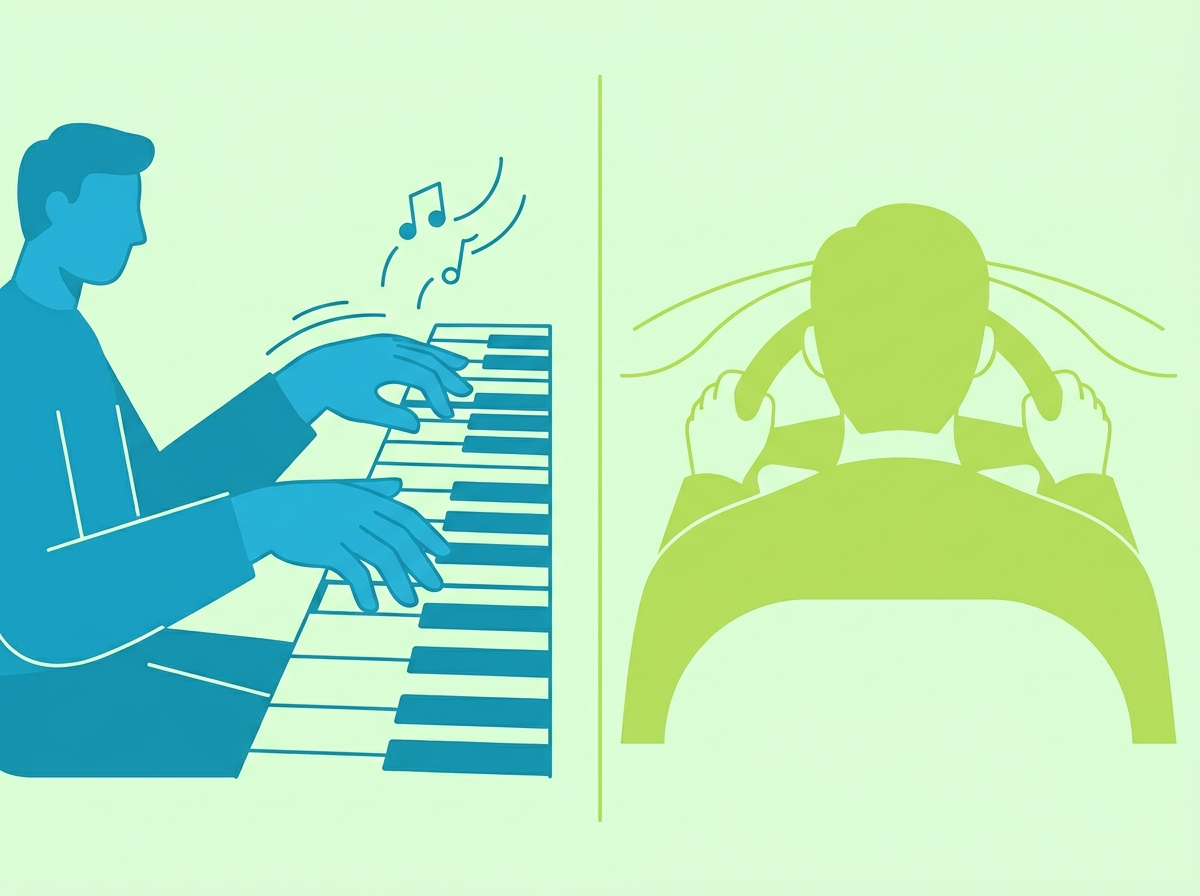
A piano student learning a new piece plays slowly, placing each finger deliberately, thinking about each note. Across many sessions, conscious effort decreases and the movements become procedural. An experienced pianist playing familiar music no longer thinks about finger placement. If that pianist is asked to consciously narrate each finger movement during a performance, accuracy degrades immediately. Conscious monitoring interrupts the procedural flow.
Driving follows the same arc. New drivers consciously track mirror checks, steering adjustments, and gear changes. Experienced drivers automate all of this. Asking an experienced driver to report every check aloud causes driving quality to drop sharply. The principle is consistent: conscious monitoring of a skill that is automating actively prevents automaticity from completing. Getting out of your own way is not passive. It is the specific cognitive move that allows procedural learning to finish, in English speaking as in any other skill.
Practice Approaches That Move You From Halting Speech to Fluent English
For intermediate English speakers who recognise the monitor overuse pattern in themselves, the following four approaches are grounded in applied linguistics and show measurable results when sustained over six to eight weeks.
Goal-directed conversation practice. Practise conversations built around specific achievable goals: describe a place, explain a process, narrate a past event. The goal directs attention towards communicating, not monitoring grammar. Task-based language teaching research, adopted in British Council teacher training, shows that task-focus shifts attention from form to meaning, which is precisely the shift that reduces monitor interference.
Repetition with variation. Practise speaking on the same topic across multiple sessions with different questions and angles. Task repetition research suggests that 7 to 10 meaningful uses of a structure in real-time speaking are needed before it begins to automate.
Deliberate sentence completion. Practise finishing sentences rather than restarting when you notice an error. Completing the thought matters more than perfect form mid-sentence. Over six to eight weeks with this constraint applied consistently, the self-interruption habit decreases measurably. The speaking strategies that work in professional English contexts reinforce the same principle.
Low-stakes structured practice. Environments that give you a clear speaking goal, allow repetition, and remove social anxiety are where procedural memory builds fastest. Speechful’s Speak with AI provides exactly this: role-playing conversations in speech where you achieve specific conversation goals, with feedback and no scheduling barrier. This is the rehearsal environment where English fluency becomes automatic before the high-stakes moments arrive.
Each approach requires consistency over weeks. English fluency compounds across hundreds of small, deliberate sessions, not a single one.
Recognise the monitor overuse pattern holding back your speaking? Build the automaticity behind real English fluency with Speechful’s Speak with AI: conversation practice in speech where the focus is communicating, not correcting.



You must be logged in to post a comment.