

Advanced English Words That Actually Sound Natural: How to Elevate Your Communication Without Stiffness

There is a very specific feeling that comes the first time you use one of your new advanced English words in a real conversation. You produce it. It lands in the sentence a little apart from everything else, a bit deliberate, a bit formal. The listener notices. You notice them notice.
Here is what is actually happening: this is not a knowledge problem. Most upper-intermediate speakers already recognise sophisticated vocabulary when they read or hear it. The challenge is production: getting those words from the page into real conversation without sounding like you just memorised them from a list.
That requires vocabulary depth. Not just knowing what a word means, but knowing how it behaves in sentences, which words it naturally pairs with, and how to reach for it automatically rather than consciously. This article breaks down the depth-versus-breadth distinction, explains why collocation makes or breaks how natural your vocabulary sounds, and gives a practical monthly structure for moving new words into natural, fluent use.
Why Learning More Words Is Not the Same as Using Words Well
Vocabulary breadth is the number of words you know. Breadth matters most at the B1 level, where limited vocabulary forces you to talk around ideas you cannot name directly. But vocabulary researchers, including Paul Nation at Victoria University of Wellington, have long distinguished between breadth and depth. For upper-intermediate speakers, the research is consistent: depth is the driver of natural-sounding language.
Depth means knowing a word fully: how it behaves in sentences, which words it naturally appears with, which register it belongs in, and what it implies beyond its core definition. Depth is what converts advanced English words from passive recognition items into vocabulary you reach for automatically in conversation.
For a B2 speaker aiming for C1, the question is rarely “do I need to learn more words?” It is almost always “do I know the words I have well enough to use them naturally?”
The Real Reason Advanced Vocabulary Feels Awkward at First

There is a predictable pattern when you use an advanced English word in conversation for the first time. You pause slightly before it, your intonation shifts, and the word arrives in the sentence a little apart from everything around it, as though you placed it there deliberately. Both you and the listener notice. This is not a language problem; it is a production-automaticity problem.
When a word is new, your working memory does two tasks at once: retrieving the word and running the rest of the sentence. Both demand processing capacity, and the result is speech that sounds considered and formal rather than fluent. Vocabulary acquisition researchers call this the “controlled” versus “automatic” processing distinction.
Advanced English words move from controlled to automatic production through repeated retrieval in varied, natural contexts. Re-reading the definition again does not shortcut this process. Only actual production builds automatic retrieval: using the word in real contexts, observing whether it landed naturally, and adjusting.
Collocation: The Word Partnerships That Make Advanced English Words Sound Natural
A collocation is a pair or group of words that native speakers use together naturally. “Make a decision,” not “do a decision.” “Pay attention,” not “give attention.” For advanced vocabulary, collocational accuracy is often the deciding factor in whether a word sounds natural or stiff.
Consider “meticulous.” It collocates naturally with “attention to detail,” “planning,” “preparation,” and “research.” It does not pair naturally with “opinion” or “mistake.” A learner who has learned the definition of “meticulous” but not its natural word partners may use it technically correctly while producing a sentence that sounds slightly off to a native ear.
Cambridge English learner corpus research identifies collocation errors as among the most persistent advanced-level mistakes, and the ones listeners register most strongly. Learning advanced English words with their typical collocations from the start prevents this class of error before it becomes a habit. For every new sophisticated word, the follow-up question should not be “what does it mean?” It should be “what does it naturally appear with?”
The Most Damaging Mistake Intermediate Speakers Make with Sophisticated Vocabulary
Register mismatch is more disruptive than collocation errors and harder to self-diagnose. Register describes the level of formality a word carries. Some advanced English words belong in academic writing, some work in formal professional speech, some cross easily between both, and some belong almost nowhere outside legal documents.
“Candid” carries a slightly formal register but works naturally in conversation: “I want to be candid with you.” “Pursuant to,” by contrast, is confined almost entirely to legal and formal written contexts. Using it in casual speech does not make you sound sophisticated; it signals that you have lost track of the register you are in.
IELTS Liz, whose Speaking preparation guidance is built on examiner-informed practice, makes this distinction directly: examiners reward vocabulary that is natural and precise for the context. Sounding over-formal in spoken English signals that you do not yet own the word. For a detailed look at how vocabulary and register decisions play out in a high-stakes spoken setting, the guide to English interview practice and confident speaking works through these decisions practically.
How to Tell When Your Advanced English Words Are Ready to Use

There is a practical readiness test for advanced English words before committing them to active speech. Can you use the word in a sentence without pausing to retrieve it? Do you know at least two natural collocations it carries? Do you know whether it belongs in formal writing, professional speech, casual speech, or some combination?
If any answer is no, the word belongs in your recognition vocabulary, not your production vocabulary. Pushing unready advanced English words into active speech produces the stiffness that makes a learner audibly recognisable. The listener experiences not the sophistication you intended but the processing effort behind the word.
The honest principle is that using simpler vocabulary naturally will always serve you better than using sophisticated vocabulary self-consciously. A clear, confident “obvious” sounds better to any listener than a hesitant “conspicuous.”
Why Formal Written Vocabulary and Natural Spoken Vocabulary Are Not the Same
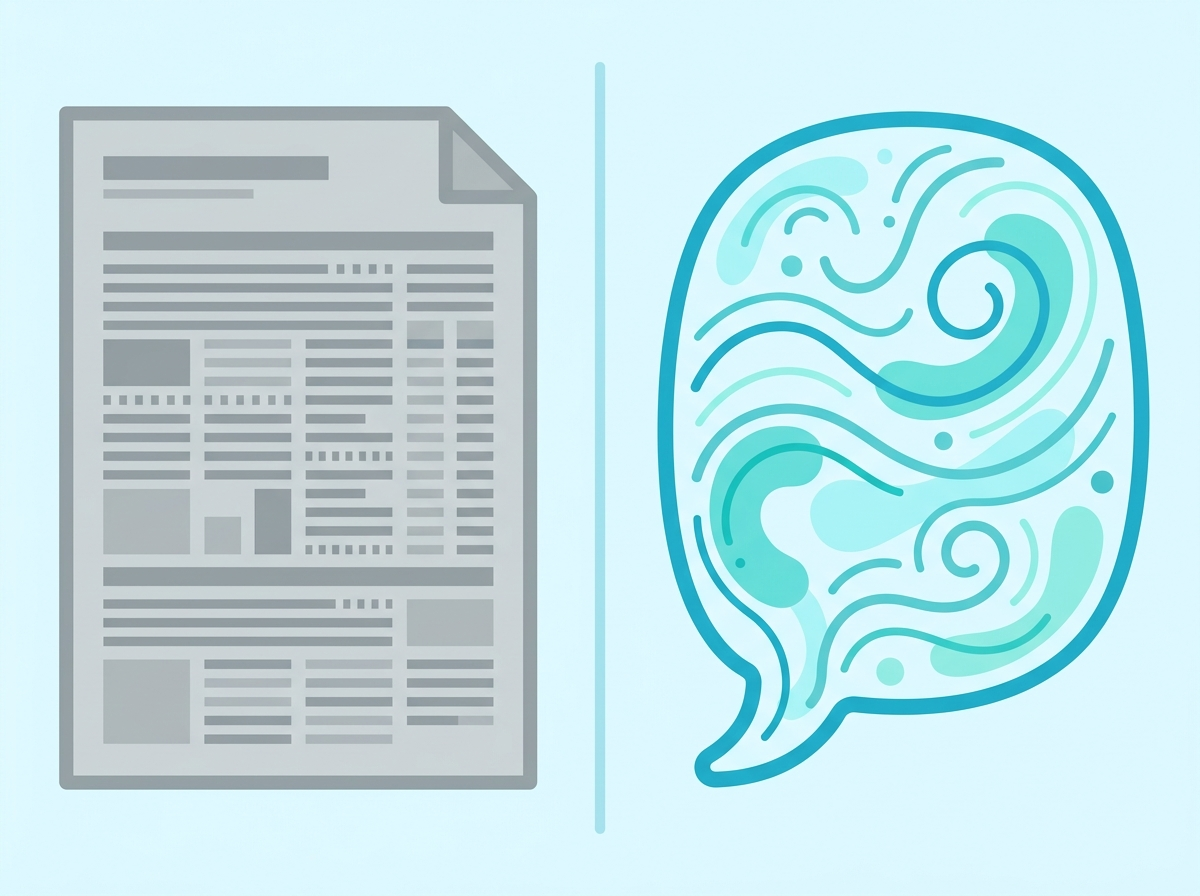
A substantial proportion of advanced vocabulary lists draws from academic and professional writing. Averil Coxhead’s Academic Word List, developed at Victoria University of Wellington, identifies the 570 word families most useful for academic study. These are genuinely useful advanced English words for academic writing and formal texts, but many carry register signals that create friction in spoken English.
The distinction that matters most for upper-intermediate speakers is not simply formal versus informal. It is written register versus spoken register. “Subsequently” appears frequently in academic essays; “afterwards” or “after that” carry the same meaning in speech without the register friction. “Nevertheless” works in spoken English used sparingly; “but” or “even so” often serve the same purpose with less weight.
Understanding which advanced English words belong in writing, which work in professional speech, and which cross freely between contexts is a depth skill. For vocabulary in a more specific academic writing context, the article on IELTS Writing vocabulary and the Academic Word List works through how this distinction applies to Task 2 essay writing.
How Many Encounters Does It Take Before an Advanced Word Feels Natural?
Paul Nation’s vocabulary acquisition research shows that learners typically need between 10 and 20 encounters with a new word in varied contexts before it becomes reliably available for automatic production. For advanced English words at the B2-to-C1 level, the number sits toward the upper end of that range, because sophisticated vocabulary carries more nuance: more register variation, more collocation constraints, more subtle connotation differences.
A single encounter in a reading passage places the word in recognition memory. Three more encounters in the same passage do not accelerate the path to automatic production. What changes acquisition speed is encountering the word across different contexts: once in a formal text, once in a conversation, once when you produce it yourself and observe whether it sounded right.
This is why spaced, varied exposure matters far more than repetition within a single study session. Producing the word (actually using it rather than recognising it) is a qualitatively different encounter from passive review.
Why Conversation Practice Beats Word Lists for Active Vocabulary
The fundamental limitation of a word list is that it presents advanced English words in isolation. The word sits there with its definition and a sample sentence. None of this involves the cognitive act that actually builds automatic production: successfully retrieving and using the word under real communicative pressure.
Goal-directed conversation practice, where you need to explain, persuade, or describe something specific, creates exactly the retrieval conditions that consolidate vocabulary. When you are trying to communicate a specific idea and you reach for a word you have recently encountered, you commit to using it. You observe whether the listener understood you naturally or whether something in your usage drew attention.
Research reviewed by the British Council confirms that active production in communicative contexts is the most reliable path from recognition vocabulary to automatic, natural use, more reliable than any passive review method, however consistent. The article on daily English conversation practice covers the habit structure that makes regular spoken production sustainable.
What Changes in Vocabulary Knowledge Between B2 and C1
The B1-to-B2 transition is primarily a breadth story. At B1, learners lack enough range to handle varied topics without regularly running out of words, and adding advanced English words through structured topic study makes an immediate, visible difference at that stage.
The B2-to-C1 transition is a different kind of challenge, one that is fundamentally about depth. The Cambridge English CEFR C1 descriptor states that a C1 speaker can “use language flexibly and effectively for social, academic and professional purposes” and can “convey finer shades of meaning precisely.” Neither criterion is met by knowing more words. Both require knowing how words behave across different registers, what they imply, which collocations carry them naturally, and when a simpler word is the more precise choice.
At C1, vocabulary depth is the differentiator. The sophisticated speaker is not the one using the most complex available word, but the one who knows exactly which word serves the sentence, and that judgement comes from production practice rather than list expansion.
A Sustainable Method for Moving Advanced English Words Into Active Use Each Month

A realistic target for a consistent upper-intermediate speaker is 15 to 20 advanced English words moved from passive recognition into natural, automatic production per month. That is not a count of words studied from a list, but a count of words that have genuinely become part of how you speak.
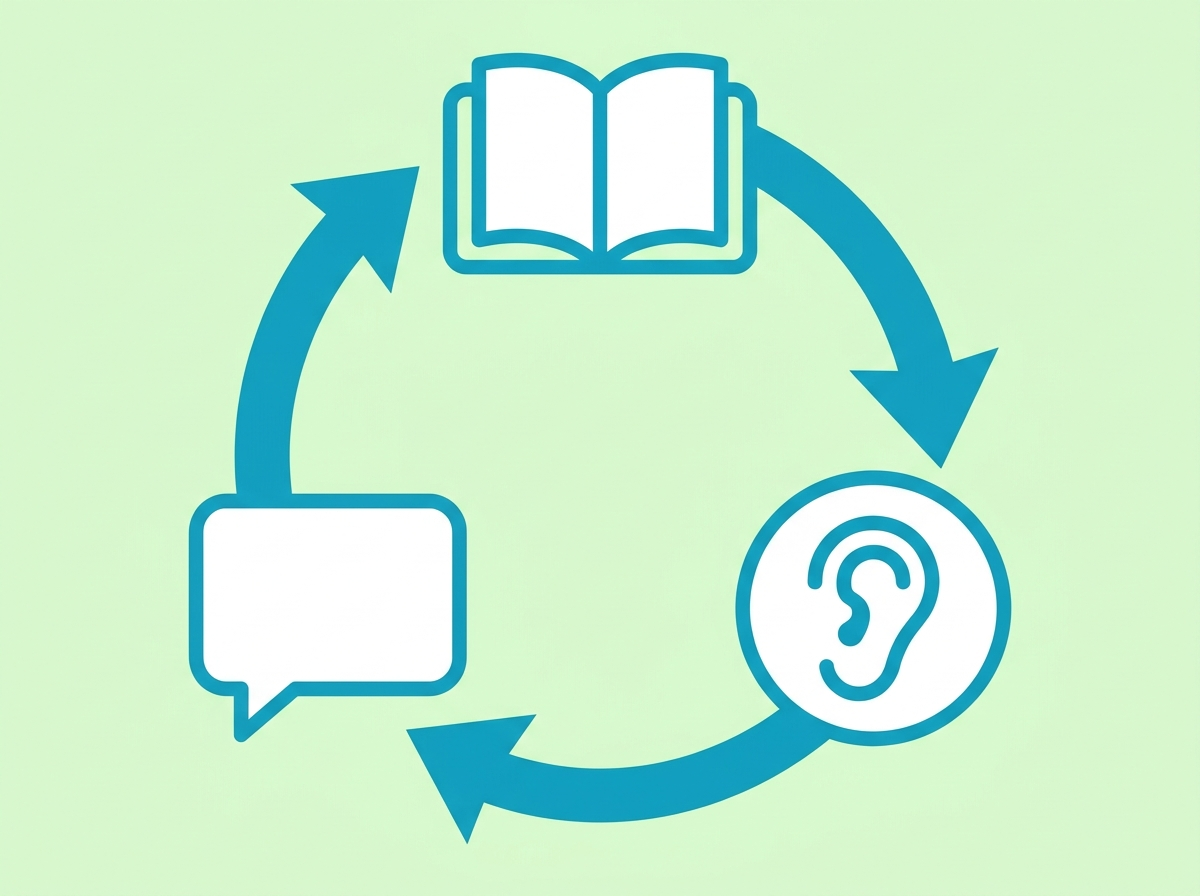
The method that produces this combines three stages. The first is deliberate encounter: read and listen at C1 level regularly, and note any advanced English words you recognise but would not have produced yourself. The second is depth study: for each target word, go beyond the definition and find its most common natural collocations, its register, and sentences that show it in context. The third is production in conversation: use each target word in at least three spoken or written conversation contexts before counting it as active vocabulary.
The third stage is where most learners stop short. Reading and note-taking are manageable. Finding real conversation contexts to deploy new vocabulary systematically is harder to arrange.
Speechful’s Speak with AI creates exactly those contexts: conversation goals that require you to explain, argue, and describe across scenarios where specific vocabulary needs to be deployed in context. Practise your target vocabulary with immediate feedback on whether your usage landed naturally at speechful.ai.






You must be logged in to post a comment.