
Connected Speech in English: The Simple Patterns That Make You Sound Effortlessly Natural
When your grammar is solid and your sentences are clear, it can be genuinely puzzling to find that something still sounds off next to native speakers, a little stiff and a little too careful. That quality is often called stilted speech, and it is one of the most common frustrations at the intermediate level.
The culprit is almost certainly connected speech in English: not vocabulary, not grammar, but phonology.
Connected speech is what happens when words come together at natural speed. Native speakers do not say each word the way it appears in a dictionary. They link sounds across word boundaries, drop others, and compress function words into barely-there syllables. The result sounds faster, smoother, and often harder to follow. But the patterns that produce it are predictable and learnable.
This guide covers the four core patterns, how they change both your speaking and listening comprehension, and what practice actually looks like to make them stick.

What Is Connected Speech in English, and Why Does It Sound So Different?
Connected speech describes the phonological processes that occur when English words are produced in continuous, natural speech. In careful or slow speech, words largely retain their dictionary forms. In natural conversation, they do not.
The gap between the two is not random. Connected speech in English follows consistent patterns, and that consistency is exactly what makes it learnable. A learner who understands linking, elision, assimilation, and reduction can begin to anticipate what will happen to sounds at word boundaries, rather than being caught off guard each time.
For most learners, the difficulty is that formal English study does not include training at the phonological level. Vocabulary is learnt word by word. Pronunciation practice, where it exists at all, targets individual sounds in isolation. Nobody teaches you that “would you like to go out?” sounds like wudjaliketageaht at natural speed, or explains why.
According to British Council’s LearnEnglish resources, connected speech is one of the most consistent barriers for intermediate learners encountering native-speaker audio: not a vocabulary gap, but a gap in phonological expectations.

The Four Patterns That Shape Natural English Speech
Connected speech in English operates through four distinct processes, each affecting spoken language in a specific way.
Linking connects a consonant-final word to a vowel-initial word. “Pick it up” sounds like pi-ki-tup; “an apple” becomes a-nap-ple. The consonant migrates to begin the next syllable. Vowel-to-vowel linking uses an intrusive glide: “go out” becomes go-wout; “see it” becomes see-yit.
Elision removes sounds entirely. “Next door” becomes nex door; “told me” becomes tol me; “going to” becomes gonna. Elision is most frequent with /t/ and /d/ sounds at word boundaries and in unstressed positions.
Assimilation changes sounds under the influence of adjacent sounds. “In bed” sounds like im bed because the /n/ shifts to the bilabial /m/ position before the /b/. “That year” becomes cha-cheer as the /t/ and /j/ merge into /tʃ/.
Weak forms and reduction operate on function words. “Can,” “and,” “to,” “of,” and “for” lose their full vowels in unstressed positions, collapsing to the schwa /ə/: kən, ən, tə, əv, fə. These reductions appear in almost every sentence of natural English.
Each pattern is systematic and operates under specific conditions, which means that learners who understand the system are no longer caught off guard by what they hear.
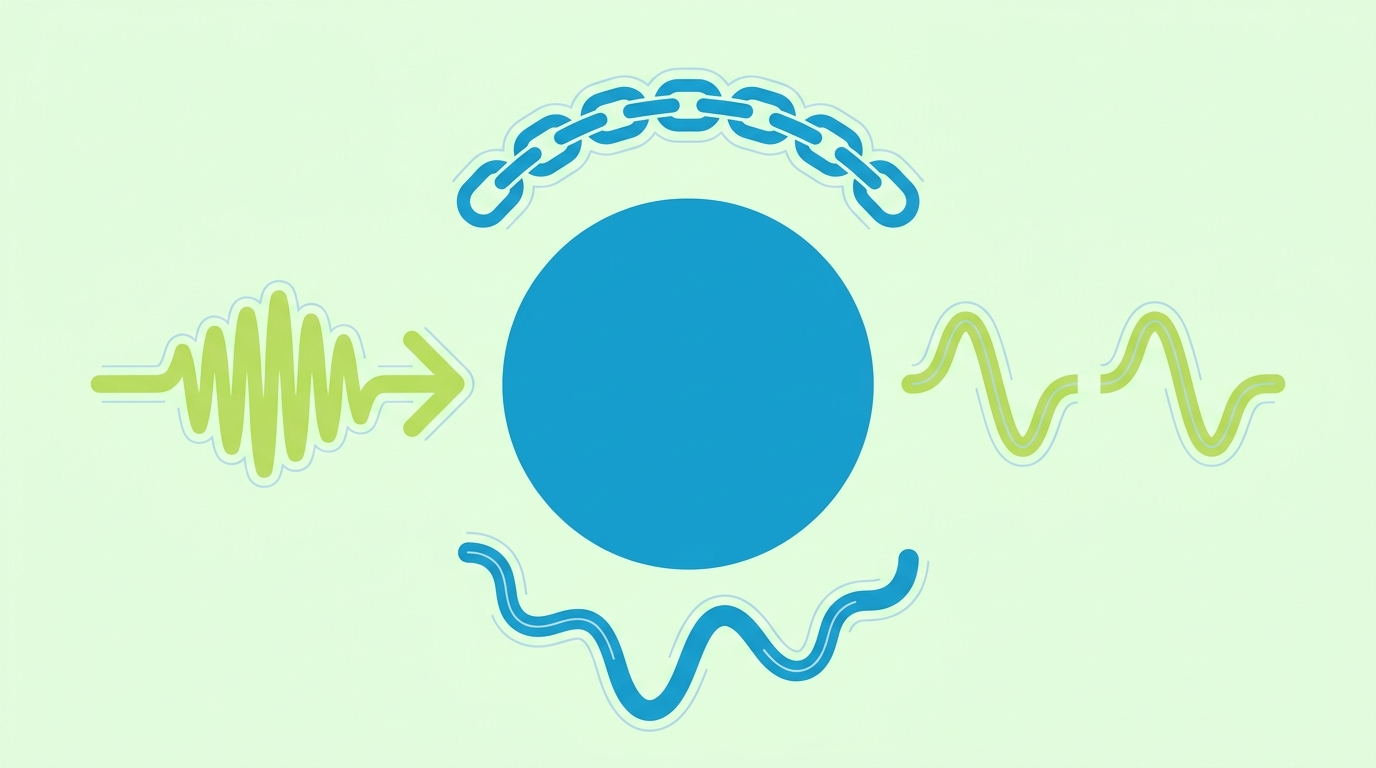
Why Grammatically Correct English Can Still Sound Stilted
Grammatical correctness and natural fluency are built through two different types of practice: grammar study develops accurate sentence construction, but it does not build the phonological habits that make speech flow naturally at speed.
A learner trained primarily through text will typically apply a text-based phonology to speech: each word given its dictionary pronunciation, function words receiving full vowel sounds, word boundaries kept crisp and clean. The rhythm is even and deliberate.
Native speakers register this as formality or stiffness. Not because the grammar is wrong, but because the speech rhythm does not match natural English at speed. It sounds like someone translating in their head, even when they are not.
The gap is not a grammar problem. It is a practice problem: not enough speaking in conditions where connected speech patterns can develop naturally. As the Speechful guide to building fluency through daily English conversation practice explains, closing this gap requires active speaking in contexts where communication, not accuracy monitoring, drives the output.

The Most Common Mistake When Practising Linking and Reduction
When learners first encounter connected speech, many respond by trying to apply the patterns consciously in real time, reminding themselves to link an apple, to elide the /t/ in next, and to reduce to to /tə/ in every sentence. The result is often a new kind of unnaturalness, because monitoring articulation in real time fragments the speech flow the learner was trying to produce.
Connected speech patterns are not rules to apply consciously mid-conversation. They are automatic processes that arise when fluent speakers focus on meaning rather than on articulation. When you monitor your own phonology in real time, you fragment the speech flow you are trying to produce.
Consider what happens when you try to consciously manage your walking mid-stride: attention shifts to mechanics, and movement becomes awkward. Connected speech works the same way. The patterns emerge naturally when your attention is on what you are communicating, not on how your mouth is forming sounds.
The goal of connected speech practice is not accurate real-time application of each rule. It is building the practice conditions (genuine conversation with real communicative goals) where the patterns can arise and gradually become automatic over time.

How Connected Speech in English Affects Listening Comprehension
The benefits of understanding connected speech in English extend to listening as well as speaking, and in many cases the listening gains are more significant.
Learners commonly describe fast native-speaker speech as sounding like “they swallow their words.” What they are hearing is connected speech: elision removing expected sounds, weak forms replacing full vowels, linking dissolving the word boundaries they expect to hear. The sounds are all there, just not where a dictionary-trained ear anticipates them.
When you understand how connected speech operates, you develop new phonological expectations. Instead of searching for the full form of “do you want to” and finding nothing, you recognise ja wanna as that phrase in its natural spoken form. Instead of parsing each function word separately, you process the content words that carry meaning and let the reduced forms pass through without confusion.
Research in second language listening comprehension consistently identifies phonological expectation as a primary processing barrier. A learner whose phonological model is built on isolated words will miss reduced and linked forms repeatedly, not because the words are unfamiliar, but because they do not sound the way the learner expects.

Elision vs Assimilation: The Key Difference and Where to Begin
Elision and assimilation are the two connected speech processes that learners most frequently confuse, and understanding the distinction between them helps you target your practice more effectively.
Elision removes a sound entirely. “Last night” becomes las night. “Sandwich” becomes sanwich. A sound the written form implies is simply not produced. The result is a shorter, quicker-sounding word.
Assimilation changes a sound rather than removing it. “In bed” becomes im bed. “I need your help” becomes I nee-jor help. No sound is missing; one has transformed under the influence of an adjacent sound.
The practical difference for learners is in the impact on listening comprehension. When a sound disappears entirely (elision), the gap creates confusion: the listener expects the sound, cannot find it, and loses the word. When a sound changes (assimilation), the word is present but modified, and it often remains recognisable once you know the pattern.
For most B2 learners, beginning with elision (particularly the high-frequency /t/ and /d/ drops before consonants) produces faster gains in both listening and speaking naturalness than starting with the more complex assimilation patterns. Assimilation tends to develop better through sustained exposure than through explicit study.
British vs American English: Do Connected Speech Patterns Differ?
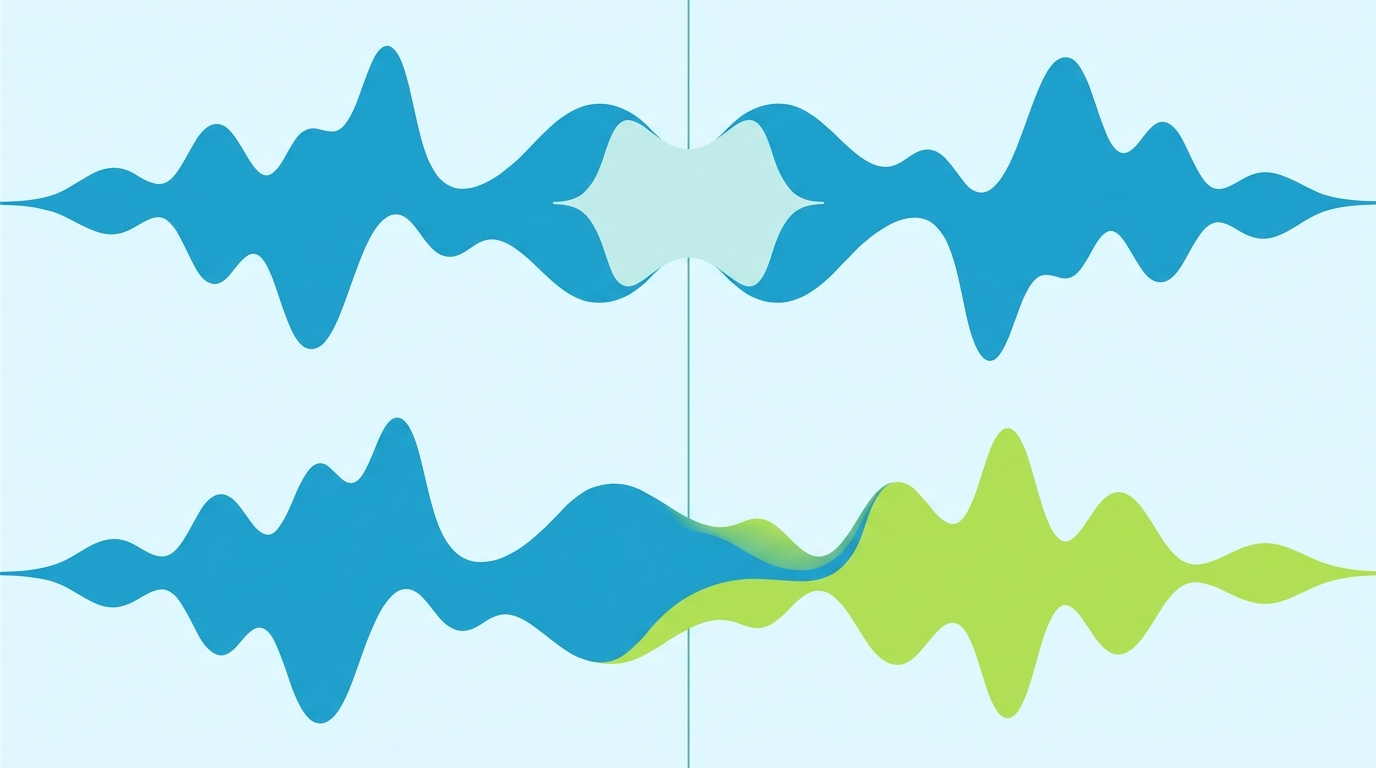
All major varieties of English use the four core connected speech processes: linking, elision, assimilation, and weak forms are properties of English phonology as a whole, not features of any single accent. The differences between British and American connected speech are real but narrower than most learners expect.
The most relevant cross-variety differences involve rhoticity and the alveolar tap. British English (in most standard dialects) is non-rhotic: the /r/ is not pronounced before consonants or at word ends. American English is rhotic, with the /r/ influencing adjacent vowels. American English also uses the alveolar tap, turning intervocalic /t/ sounds into something closer to /d/: “butter,” “water,” and “better” all use this sound.
For learners who do not target one specific variety, these differences matter less than the core patterns common to both, and intelligibility across accents is the practical goal. Choosing consistent input (whether British or American audio) helps your ear calibrate, but the fundamental connected speech skills transfer across both varieties.
It is also worth distinguishing connected speech development from accent reduction: where accent reduction aims to eliminate first-language phonological features from your English, connected speech training aims to make your English sound natural and fluent within whatever variety you speak. They are different goals requiring different approaches, and for most learners connected speech training produces more immediate practical gains.

Why Conversation Practice Outperforms Pronunciation Drills
Pronunciation drills have a role in building initial awareness of specific connected speech patterns, but they are a limited method for developing those patterns as automatic speech behaviour.
The reason is fundamental: connected speech does not occur in isolation. The processes that produce it (weak forms, elision, linking, assimilation) arise from the rhythm of natural communication. Weak forms emerge because function words carry less information weight than content words, and fluent speakers’ articulatory systems reflect that automatically. Linking occurs because the speaker’s attention is on the next word’s meaning, not on the previous word’s final sound.
In a drill, you slow down, attend deliberately to each sound, and produce something closer to careful speech than natural speech. You practise the wrong cognitive mode.
British phonetician John Wells, whose Longman Pronunciation Dictionary (first published 1990) remains the standard reference for English phonology, documented how the phonological behaviour of words in connected speech differs systematically from their behaviour in isolation. Patterns that are stable in careful speech surface differently when words are embedded in natural utterances. Drills practise the isolated form; conversation practises the connected form.
Conversation practice, where your attention is on achieving a real communicative goal, creates the conditions where connected speech patterns operate in the background. Over time, they become automatic rather than calculated.

The Right Patterns for B2 Learners to Prioritise
The Common European Framework of Reference for Languages (CEFR), published by the Council of Europe, defines C1 speaking as the ability to “express themselves fluently and spontaneously, almost without effort.” Connected speech is precisely what makes spontaneity sound natural rather than effortful. For B2 learners, developing these patterns is the most direct route toward that quality of ease.
The recommended priority order for B2 learners:
First: Weak forms and reduction. Present in almost every sentence, these have the greatest immediate impact on both speaking naturalness and listening comprehension. Learning to reduce “and,” “to,” “can,” and “for” in unstressed positions immediately makes speech sound less rigid.
Second: Consonant-to-vowel linking. The most systematic and teachable linking pattern. It creates smooth transitions between words and removes the word-by-word cadence that marks careful speech.
Third: Common elision patterns. The /t/ and /d/ drops before consonants are high-frequency and accessible once basic rhythm patterns are established.
Assimilation and more complex vowel-linking patterns typically develop naturally through exposure once the first three are in place. For learners also preparing for IELTS, these patterns interact directly with the Pronunciation criterion: the guide to IELTS Speaking common mistakes by criterion covers how phonological fluency affects all four scoring criteria.

How to Find Your Gaps and Build a Practice Plan
The challenge of self-study for connected speech is that your own speech is difficult to evaluate objectively. Patterns that feel natural to you may still sound stilted to a native ear, because you have been practising the same way for years.
A practical approach starts with recording yourself in genuine spontaneous speech: not a scripted passage, but real conversation or an improvised response to a topic. Listen back not for grammatical errors but for rhythm. Are you stressing function words as heavily as content words? Are your word boundaries sharper and more deliberate than they would be in native-speaker input?
Target one pattern at a time, starting with weak forms as described above, then record yourself, practise, and listen again. Comparing your production against native-speaker audio (podcasts, films, real conversations) helps calibrate whether the pattern is developing or simply feeling more comfortable without changing.
Shadowing is one of the most effective early-stage tools: repeating a native speaker’s utterance immediately after or simultaneously with hearing it forces your production to match their rhythm, reduction, and linking at the same time.
Most importantly, build your practice in real conversation conditions. Speaking with a genuine communicative goal is where connected speech patterns become automatic rather than calculated. The Speechful guide to speaking confidently in professional English covers how to bring natural speech patterns into high-stakes situations where fluency under pressure matters most.

Developing connected speech takes sustained practice over months, not days. This article builds awareness; regular conversation with real communicative goals builds the spontaneous, effortless fluency described in the CEFR C1 descriptor.
Practise connected speech in English through real conversation scenarios with Speechful’s Speak with AI. Each session gives you a conversation goal where your attention is on communicating, not on managing sounds: the exact condition that makes linking, elision, and reduction become automatic rather than something you have to calculate.





You must be logged in to post a comment.